Old Bob, N4XX, sat in his cluttered shack, the glow of a modern transceiver mixing with the faint smell of old tube gear. At 85, he had chased DX for nearly seven decades. Tonight the bands were quiet, so he leaned back, closed his eyes, and let the ghosts of the airwaves speak.
It began in the spark-gap days, before most people even believed radio could cross oceans. In the early 1920s, amateurs were still tinkering with crude transmitters on wavelengths measured in hundreds of meters. The dream was simple yet impossible: talk across the Atlantic. Then, in December 1921, Paul Godley (2ZE) sailed to Scotland for the great transatlantic tests. American hams sent their calls into the night. Godley’s receiver pulled in faint signals from across the sea. The barrier had cracked.
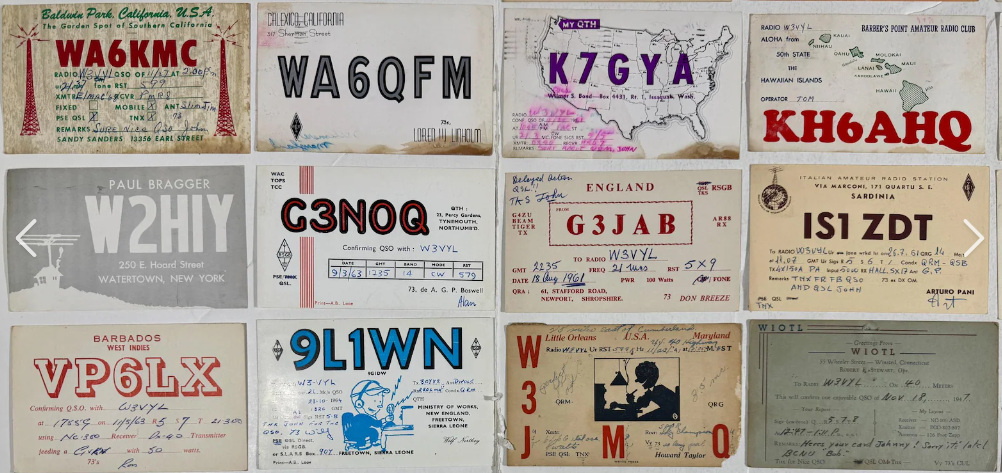
By 1923 and 1924, the real explosion came. Amateurs discovered the magic of shorter wavelengths—80, 40, even 20 meters. Suddenly the ionosphere became a highway. In the fall of 1924, a New Zealand sheep farmer named Frank Bell (Z4AA) sat at his rig and exchanged signals with British operators. Halfway around the world on 92 meters. Then came longer hauls: New Zealand to the U.S., Australia to Europe. Hams logged contacts that newspapers called miracles. They mailed handwritten reports and treasured QSL cards printed on cheap cardboard—proof that their tiny signals had traveled thousands of miles. DXing was born. “DX” simply meant distance, but to those pioneers it meant wonder.
The 1930s became the Golden Age. Vacuum tubes replaced spark. Better receivers, directional antennas, and growing sunspot cycles turned DX from miracle to obsession. Operators chased “rare ones” with Morse code that sounded like music. They built beam antennas in backyards and stayed up all night riding propagation. Wars would silence the bands, but when peace returned, DXing roared back stronger.
In the 1950s and 1960s, single sideband (SSB) replaced much of the old AM and CW for voice work. Transceivers made it easier. The ARRL DXCC program—worked and confirmed 100 countries—became the holy grail. Hams dreamed of the Honor Roll: every recognized country. Some spent lifetimes chasing it.
Then came the expeditions. In 1948, Bob Denniston (W0DX) organized “Gon-Waki,” a light-hearted trip to the Bahamas that proved amateurs could activate rare spots on purpose. DXpeditions were born. Teams sailed to rocks in the ocean, climbed volcanoes, and set up stations on desert islands. They endured storms, mosquitoes, and equipment failures just so the rest of the world could log a new entity. Bouvet, Peter I, Scarborough Reef—places most people would never see became household names in shacks everywhere.
Bob smiled, remembering his own first big one. It was 1972. He worked a Russian station on 20 meters with just 50 watts and a dipole strung between two trees. The operator signed RAEM—Ernst Krenkel, the legendary polar explorer. For a kid from Indiana, it felt like shaking hands with history.
The 1970s and 1980s brought new challenges and tools. 160 meters (“Top Band”) became the ultimate test—weak signals buried in noise, yet operators like Stew Perry (W1BB) coaxed continents across the dark Atlantic. Satellites appeared. Packet radio and early digital modes flickered on VHF. But HF DXing remained king.
Then the computer age changed everything. In the 1990s and 2000s, PSK31 let modest stations whisper across the globe. JT65 and later FT8 turned weak-signal work into something almost magical—contacts that once took hours of patience now happened in minutes. DXpeditions streamed live on the internet. Club Log and online QSL systems made confirming contacts instant. Young operators who had never touched a straight key suddenly worked 100 countries in a weekend.
Bob opened his eyes and looked at the wall covered in QSL cards—yellowed ones from the 1950s next to glossy ones from last year’s FT8 pileup on Bouvet. The equipment had changed beyond recognition: from spark to software-defined radios, from hand-sent Morse to algorithms that could pull signals from the noise floor.
But the spirit? That had never changed.
DXing was still about the same things it had always been: curiosity, persistence, and the thrill of hearing a faint voice or a string of dits from the other side of the planet and knowing—against all odds—that your signal had made the journey.
He keyed the mic gently, just once.
“CQ DX… this is Whiskey Eight Tango Oscar Mike, listening.”
Somewhere, halfway around the world, another operator smiled and reached for the key.
The long haul continued.
From the first crackling transatlantic tests of the 1920s to today’s digital modes that let backyard stations reach the rarest corners of the Earth, DXing has always been amateur radio’s greatest adventure—a century-long story of humans pushing signals farther, learning how the ionosphere dances, and turning invisible waves into friendships across oceans and decades.