The Last Signal
The wind howled like a freight train through the mountains of western North Carolina. Hurricane Helene had torn through the region two days earlier, ripping down cell towers, flooding roads, and silencing the grid. In the small town of Marshall, power was out, phone lines were dead, and the only working repeater sat high on a ridge with battery backup and a solar trickle charger.
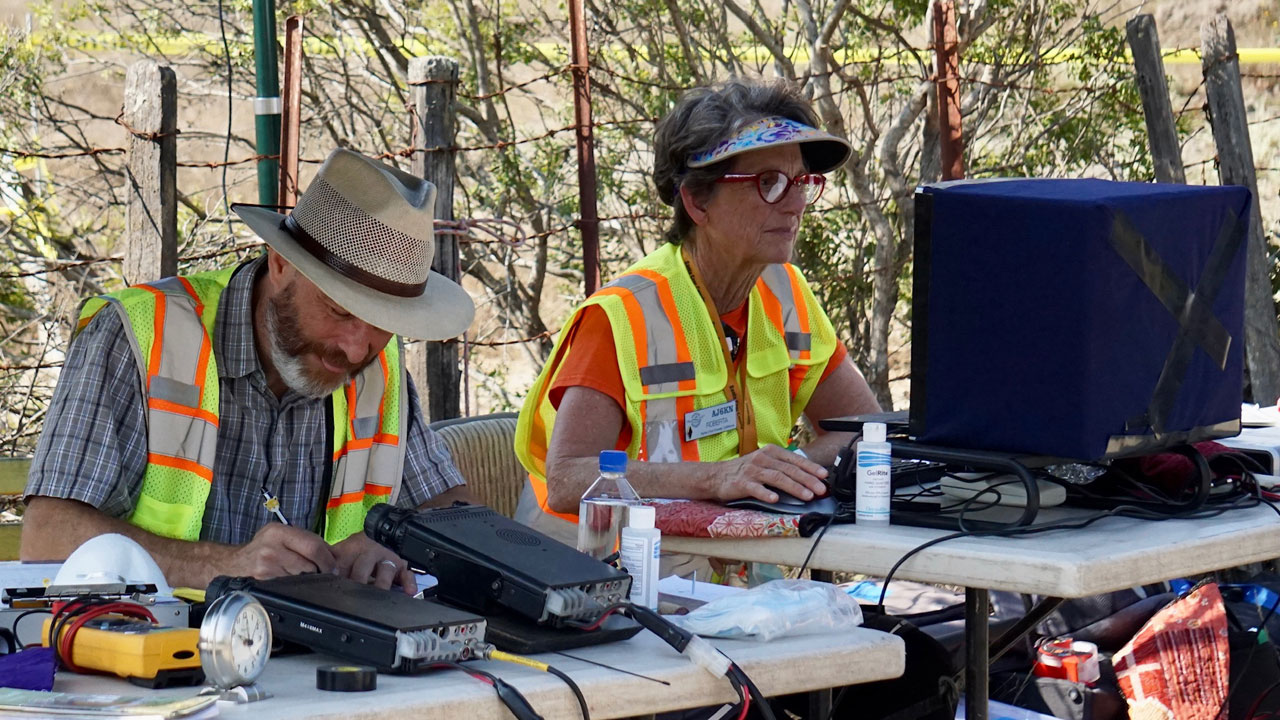
Sarah Mitchell—callsign KM4ZAK—sat at a folding table with her Yaesu FT-991A and a laptop. As the local ARES Emergency Coordinator, she had been activated the moment the National Weather Service issued the watch. Now, with the storm long gone, the real work had begun.
Her radio crackled to life on the 2-meter simplex frequency they had designated as the local command net.
“Net Control, this is Whiskey Four Alpha Bravo from the ridge road checkpoint. We have a family of five trapped by a washed-out bridge. They need medical attention for an elderly woman with chest pain. Over.”
Sarah keyed the mic. “W4AB, Net Control copies. Stand by for relay.”
She switched to the HF frequency on 40 meters, where the Hurricane Watch Net and regional ARES stations were monitoring. Using the standard radiogram format she had drilled into her team during monthly training nets, Sarah passed the traffic clearly and concisely:
“Priority traffic for emergency management. Requesting air or ground medical evacuation for possible cardiac event at coordinates 35.8 North, 82.7 West. Five souls total. Repeat: Priority medical.”
Within minutes, a station in Asheville acknowledged and relayed it to the county Emergency Operations Center (EOC). Another ham, operating from a go-kit in his truck near the state line, confirmed that a National Guard helicopter had been diverted.
That was just one message. In the past 36 hours, Sarah’s team of twelve local operators had handled over two hundred pieces of traffic: welfare checks for isolated families, requests for potable water and generators, damage assessments from roving teams using APRS trackers to report road conditions, and even digital messages via Winlink when voice propagation faded.
One operator, an older gentleman named Tom (W4TLM), had hiked two miles with a portable QRP rig and a Bioenno battery pack to reach a cut-off neighborhood. From there, he used JS8Call—a digital mode that allowed keyboard-to-keyboard messaging even at extremely low signal levels—to pass health-and-welfare messages to relatives across the country. “Your mom is safe and dry at the shelter,” one message read. “She says tell the grandkids she loves them.”
At the county EOC, the professional emergency managers had lost their primary communications when the fiber optic lines went down. The ARES team had set up a station right beside them, providing a reliable backup link on VHF/UHF repeaters and HF for longer-range coordination with state agencies and the Red Cross. When cell service finally began to flicker back in some areas, the hams stayed on the air—because they knew infrastructure could fail again at any moment.
Sarah leaned back for a moment, rubbing her eyes. She thought about the training that had prepared them for this: FEMA ICS-100 and ICS-200 courses, ARRL Emergency Communications training, monthly simulated emergency tests (SETs), and countless Field Days where they practiced running on generator power and batteries. She remembered studying the differences between ARES (which could activate early for public service) and RACES (which operated under strict government activation rules during declared emergencies). In this storm, they had started in ARES mode and seamlessly transitioned when the county officially activated RACES.
A new voice broke through the static: “KM4ZAK, this is November Four Charlie Delta at the shelter. We just received a supply drop. Can you relay that insulin and baby formula have arrived safely?”
“Affirmative,” Sarah replied, her voice steady despite the exhaustion. “Message relayed. Thank you for the update.”
Outside, the sky was finally clearing. Rescue teams were moving in, but the hams knew their job wasn’t over. They would stay until the last road was cleared and the last family was accounted for—passing messages the old-fashioned way when modern systems failed.
As the sun dipped behind the damaged ridges, Sarah keyed the mic one more time for a quick announcement on the net:
“This is KM4ZAK, Net Control. To all stations: You are the reason some of these folks are still here today. When all else fails, amateur radio works. Stay safe out there. 73.”
In the silence that followed the sign-off, the faint hiss of the radio felt like a promise—that no matter how dark the night or how fierce the storm, a network of dedicated volunteers with nothing more than radios, antennas, and skill would always keep the lines of communication open.
This story highlights the real roles of ARES and RACES, the mix of voice nets, digital modes (like Winlink and JS8Call), traffic handling, go-kits, and the critical backup service hams provide when cellular, internet, and even public safety systems go down. It draws from documented responses in events like Hurricane Helene, Katrina, and other disasters.
Would you like me to expand the story (perhaps add more technical details on equipment, specific modes, or a different disaster setting like a wildfire or earthquake), make it longer, or focus on a particular aspect such as a younger operator’s first activation or international response?