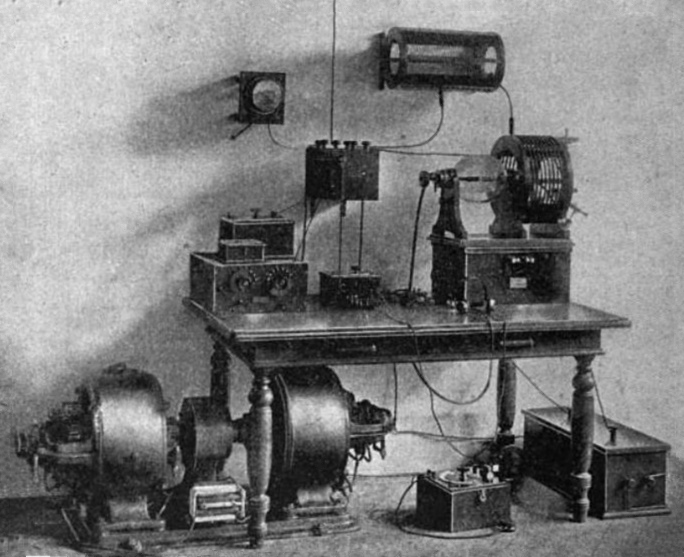
In the late 19th century, the invisible forces of electromagnetism crackled to life in laboratories and backyards around the world. James Clerk Maxwell had predicted radio waves in equations, Heinrich Hertz proved they existed in 1888 with his spark-gap experiments, and a determined young Italian named Guglielmo Marconi turned theory into distance. By 1901, Marconi’s wireless signals had crossed the Atlantic, but the true spark of amateur radio came from thousands of ordinary tinkerers—teenagers, engineers, and dreamers—who built their own crude transmitters from coils, condensers, and wires strung between rooftops. They called themselves “wireless amateurs,” tapping out Morse code in attics and sheds while the world still relied on telegraph wires. These early hobbyists filled the air with experimental chatter, unaware they were inventing an entirely new way for ordinary people to connect across miles.