Sparks in the Ether
In the autumn of 1919, young Elias Crowe crouched in the attic of his father’s Ohio farmhouse, ear pressed to a homemade crystal set. The war was over, but the air still hummed with ghosts. Through the faint hiss and crackle came a voice—thin, metallic, impossibly far away—reading weather reports from a naval station in New Jersey. Elias was fourteen. That night, amateur radio claimed him.
He built his first transmitter from a Ford spark coil, a glass plate condenser, and a chunk of galena he’d traded for at the hardware store. Call sign 8AE (later W8AE when the government finally issued licenses again) went on the air in 1921. Nights found him hunched over the key, trading Morse with strangers in Pennsylvania, Illinois, and once—miraculously—a Canadian in Toronto. The ether was wide open, a frontier no one yet owned.
By 1926 Elias had moved to Chicago for work as a telegraph operator. In a rented room above a bakery he upgraded to a Hartley oscillator and began chasing DX—long-distance contacts. One January night the aurora danced green overhead and his signal rode the ionosphere all the way to New Zealand. The reply came back in careful, elegant Morse: “Heard you 559, old man. Name here is Charlie. 73.” Elias danced around the room like a madman.
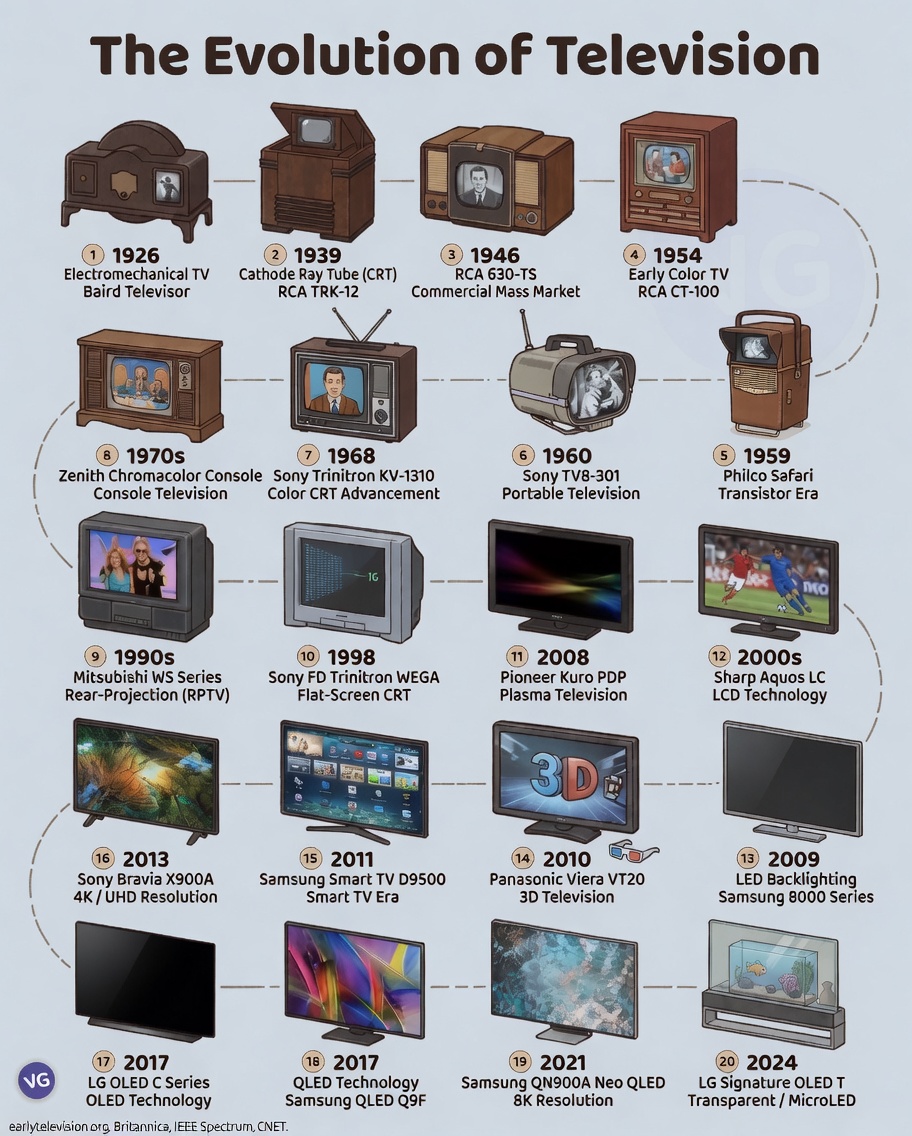
Meanwhile, across the ocean, a Scotsman named John Logie Baird was fiddling with spinning discs and wax cylinders. In 1925 he transmitted the first recognizable moving image—a ventriloquist’s dummy named “Stooky Bill.” Elias read about it in QST magazine and laughed. “Pictures through the air? Next they’ll send Sunday dinner.”
But the future refused to stay polite. In 1927 Philo Farnsworth, a twenty-one-year-old farm boy from Utah, demonstrated the first fully electronic television in a San Francisco lab. Elias, now twenty-two and married, saw a crude demonstration at the 1933 Century of Progress Exposition in Chicago. A tiny, flickering face stared back at him from a mechanical receiver the size of a refrigerator. He came home quiet, thinking.
The 1930s were golden for hams. Voice transmission had replaced most Morse on the popular bands. Elias upgraded to a Collins 32V transmitter and a Hallicrafters receiver, working phone patches for soldiers overseas during the war. When peace returned in 1945, the FCC opened new frequencies. Television stations bloomed like dandelions. By 1948 Chicago had four channels. Elias bought a 10-inch DuMont set on time payments and watched Milton Berle while the kids cheered.
Yet something in him still yearned for the old magic—the sense of reaching across the dark alone. In 1952 he joined the ranks of the first amateur television operators. His garage became a laboratory of vacuum tubes, flying-spot scanners, and a monstrous 16mm film chain. On 439 MHz he beamed grainy black-and-white pictures of his workbench, his dog, and eventually his own face, pipe clenched in teeth, waving at invisible neighbors.
“W8AE/ATV testing,” he would announce in the deep, patient voice that had once sent Morse across oceans. “Who’s receiving?”
A reply came from a dentist thirty miles away who had built his own receiver from war-surplus radar parts. Then another from a high-school teacher in Michigan. The pictures were tiny, jerky, and beautiful.
In 1961 Elias’s oldest son, Daniel, came home from college with news: NASA had just bounced a signal off the moon—Echo 1. Ham radio had gone to space. Elias stayed up all night listening to the first Oscar satellite (Orbiting Satellite Carrying Amateur Radio) as it beeped overhead like a mechanical nightjar. He looked at the television in the living room, now showing color pictures of a smiling President Kennedy, and felt the old thrill.
By 1973 Elias was a grandfather. Slow-scan television—SSTV—had arrived, invented by another ham, Copthorne MacDonald. Grainy still images could now travel the world on ordinary voice frequencies. Elias traded a color portrait of his granddaughter for a picture of a Japanese ham’s cherry blossoms. The screen glowed in the dark shack, and for a moment the decades collapsed. From spark-gap to satellite, from dots and dashes to living color, the same wonder remained.
On a crisp October evening in 1988, Elias—now eighty-three—sat before his final rig. The bands were crowded with voice, data, and even packet radio. A young operator in Australia asked if the old man had any stories. Elias keyed up, voice rusty but warm.
“Son, I once talked to New Zealand with a spark coil and a piece of railroad track for an antenna. Tonight I’m watching live pictures from the Space Shuttle on my computer screen. The air never belonged to us. We just borrowed it for a while.”
He signed off with his old call, then sat back and watched the green tuning eye of his receiver glow like a tiny, faithful star.
Somewhere above the house, satellites whispered to one another in the dark, carrying voices and pictures across the same invisible ocean that had first enchanted a boy in an Ohio attic.
The ether, patient and eternal, kept every spark.